
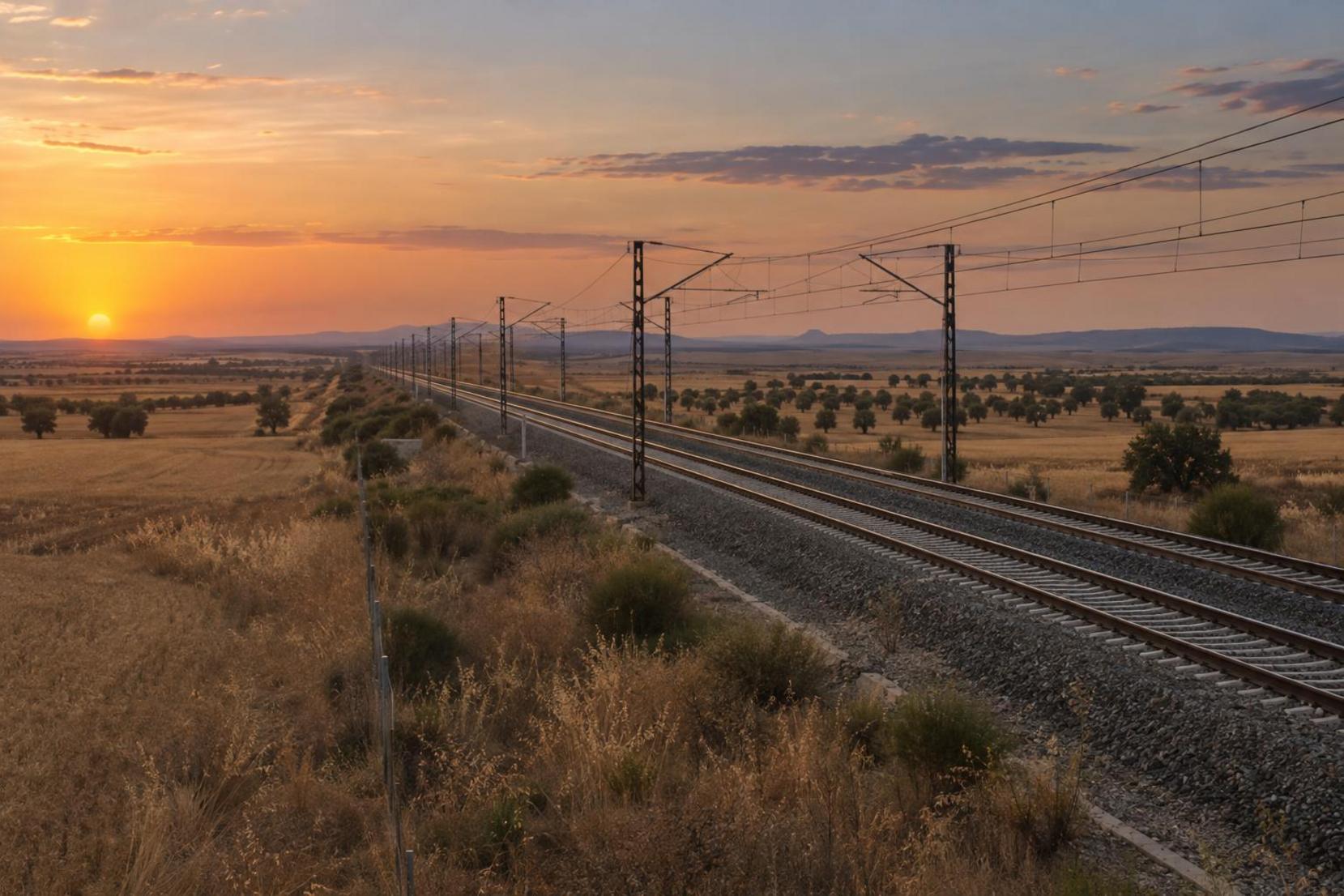
On 28 October 2026, a railway accident near Urda (Toledo), on the Madrid-Seville high-speed line, killed 69 people and left more than 100 injured. One week later, the Government has approved Royal Decree-Law 32/2026 (Real Decreto-ley 32/2026), published in the Official State Gazette (BOE) on 4 November 2026, with financial aid for the victims and their families and with Social Security (Seguridad Social) and employment measures that are worth knowing as soon as possible.
If you have been affected by the Urda train accident, or if someone in your family was traveling on one of the trains, you can write to Fernanda Vargas on WhatsApp or book an appointment on her Calendly. Fernanda Vargas, employment lawyer in Madrid, can review your specific situation and help you with sick leave, pensions and applications.
In this guide we explain, with the text of the law in hand, who can receive the aid, how much, how and when to apply, why sick leave and pensions resulting from the accident are calculated as a work accident, and what protection workers have if they could not get to work because of the line closure.
What Royal Decree-Law 32/2026 Approves after the Urda Train Accident
Royal Decree-Law 32/2026, of 3 November, entered into force on the same day it was published in the BOE, 4 November 2026. It applies to the victims of the accident that occurred on 28 October 2026 at kilometer point 118 of the Madrid-Seville line, near Urda, in which a Renfe AVE train with 397 passengers struck an Iryo train with 147 passengers.
The law brings together four groups of measures that matter to the people affected:
- Direct aid for death and for injuries, paid regardless of who is later found to be responsible for the accident.
- Additional aid that works as an advance on the compensation for civil liability, for the same amount.
- Special Social Security rules: sick leave resulting from the accident is treated as a work accident for the purposes of the cash benefit, and permanent disability and death and survivors’ pensions are calculated as a work accident when this is more favorable.
- Employment protection for anyone who could not go to work or arrived late because of the accident or the disruption of rail services.
It also limits price increases in the services affected by the interruption of the line between Madrid, Castilla-La Mancha and Andalusia. This is not the first time such a scheme has been approved: Royal Decree-Law 1/2026, of 27 January, already granted aid to the victims of the Adamuz (Córdoba) and Gelida (Barcelona) accidents, and the new royal decree-law also amends it to extend the pensions for those accidents to people who were in a situation treated as registered (situación asimilada al alta).
Who Can Receive the Aid: Direct Victims and Family Members
The law distinguishes between direct victims and indirect victims.
Direct victims
Direct victims are the people who were injured or killed because they were involuntarily and directly involved in the accident. To receive the aid, you must have been a passenger, train driver, trainee staff or on-board staff, in any category, of the trains involved. In other words, the aid covers both passengers and crew.
The railway companies must send the body that processes the aid the list of people who were on board within 15 days of the entry into force of the royal decree-law. In the case of death, the Administration will obtain the death certificate, and in the case of injuries, the report of the insurer of the Compulsory Travelers’ Insurance (Seguro Obligatorio de Viajeros) recognizing the category of the injuries.
Indirect victims in the case of death
When the person died, the aid goes to their family members. First, and at the same time, these people:
- The spouse who was not legally separated, or the partner who lived with the deceased permanently, in a relationship similar to marriage, for at least the two years before the death. If they had children together, it is enough to prove that they lived together in the period immediately before the death.
- The children of the deceased, regardless of their age and parentage, including posthumous children.
- The minor children of the spouse or partner (even if they were not children of the deceased) and the adult children of the spouse or partner who were financially dependent on the deceased.
If there are none of these people, the parents receive the aid; if there are no parents, the grandparents (second-degree ascendants); and if there are no grandparents either, the siblings.
How the aid is shared among several family members
If the spouse or partner and children are both entitled, the amount is divided into two halves: one for the spouse or partner and the other for the children, who share it equally. If there is no spouse, partner or children, the order of parents, grandparents and siblings applies, and when there are several people in the same group, they share the amount equally.
How Much Is Paid: Death and Injuries
Article 3 sets fixed amounts. For death, 72,121.46 euros are paid per deceased person. For injuries, the amount depends on the category recognized under the scale of the Regulation on Compulsory Travelers’ Insurance:
| Situation | Aid |
|---|---|
| Death | 72,121.46 euros per deceased person |
| Injuries, category 1 | 84,141.7 euros |
| Injuries, category 2 | 60,101.22 euros |
| Injuries, category 3 | 54,091.08 euros |
| Injuries, category 4 | 48,080.96 euros |
| Injuries, category 5 | 42,070.84 euros |
| Injuries, category 6 | 36,060.72 euros |
| Injuries, category 7 | 30,050.6 euros |
| Injuries, category 8 | 24,040.48 euros |
| Injuries, category 9 | 18,030.36 euros |
| Injuries, category 10 | 12,020.24 euros |
| Injuries, category 11 | 9,015.18 euros |
| Injuries, category 12 | 7,212.14 euros |
| Injuries, category 13 | 5,409.10 euros |
| Injuries, category 14 | 2,404.04 euros |
These amounts are paid for the harm suffered and regardless of the later determination of liability. There is no need, therefore, to wait for the accident investigation or the court proceedings to end.
The Advance on Compensation: a Second Payment of the Same Amount
In addition to the aid above, beneficiaries may request, within the same procedure, additional aid as an advance on the compensation for civil liability arising from the accident. Its amount is the same as the aid that corresponds to each person according to the table.
In return, the State takes over (is subrogated to) the right to collect that compensation up to the amount advanced. In practice:
- If the compensation set later is lower than the advance, the beneficiary does not have to repay the difference.
- If the compensation is higher than the advance, the beneficiary receives the part that exceeds the advance.
To decide on this advance, the Administration may ask the court handling the criminal proceedings for information. If it does not receive it within a month, or it is insufficient, the deadline to decide on the advance is suspended, but that suspension does not affect the processing or payment of the main aid under article 3.
Compatibility, Income Tax and What This Aid Does Not Replace
The law makes several points clear about the death and injury aid under article 3 that often worry families:
- It is compatible with other grants and aid for the same purpose, with compensation from the civil liability insurance of railway companies, infrastructure managers or other administrations, with the victims’ own insurance and with the compensation under Regulation (EU) 2021/782 and the Compulsory Travelers’ Insurance.
- It is non-refundable: victims do not have to pay it back.
- It is exempt from Personal Income Tax (Impuesto sobre la Renta de las Personas Físicas, IRPF).
- It does not replace the responsibilities and obligations of railway companies, infrastructure managers or public administrations. The compensation due under transport legislation still exists.
The aid is paid in a single payment after notification of the award, and those who receive it do not have to provide any guarantee to collect it.
How and When to Apply
The application procedure must be set by a resolution of the Secretary of State for Transport and Sustainable Mobility. When it is published, a three-month period will open to submit the application, which may be extended ex officio or at the request of those concerned for justified reasons.
The steps set out in the law are these:
- Submission of the application within three months of the publication of the resolution.
- If a document is missing, the Administration will ask for it to be corrected within a maximum of ten working days.
- Provisional decision proposal with the list of beneficiaries and the amount, and a ten-working-day period to submit objections.
- Final decision, notified within a maximum of six months from the end of the application period. There may be partial decisions earlier, for applications already verified.
- Single payment of the aid.
The procedural acts are published on the electronic office (sede electrónica) of the Ministry of Transport and Sustainable Mobility, and are also notified by the means each person has chosen. That is why it is advisable to check that electronic office and the chosen means of notification often.
To make the process easier, comprehensive assistance offices will be created in the Government Delegations and Sub-delegations of the autonomous communities where affected people live. These offices will help submit applications for the aid and benefits of the royal decree-law.
Sick Leave from the Accident Counts as a Work Accident
This is one of the most important measures for injured workers. The General Social Security Law (Ley General de la Seguridad Social) defines a work accident as an injury suffered in the course of or as a result of work as an employee (article 156.1), including the journey to or from work, and excludes accidents due to force majeure unrelated to work (article 156.4.a). Anyone traveling for personal reasons would not, in principle, have had the protection of a work accident.
Temporary disability processes started before 30 November 2026 as a result of the railway accident referred to in article 1 shall, on an exceptional basis, be considered a situation treated as a work accident, exclusively for the purposes of the temporary disability cash benefit of the Social Security system. As a result of this treatment, no minimum contribution period shall be required, in accordance with article 172.b) of the consolidated text of the General Social Security Law, approved by Royal Legislative Decree 8/2015, of 30 October.
What this means in practice:
- It applies to sick leave (temporary disability, incapacidad temporal) started before 30 November 2026 as a result of the accident.
- No minimum contribution period is required to receive the benefit.
- As with any work accident, the benefit is paid from the day after the start of sick leave, and the full salary for the day the leave starts is paid by the employer (article 173.1 of the General Social Security Law). In sick leave for a common illness or a non-work accident, by contrast, the benefit does not start until the fourth day.
- The doctor of the public health service will code the sick leave with a specific code to be set by the Ministry of Health, in coordination with the National Social Security Institute (INSS).
- The equivalence applies only for the purposes of the temporary disability cash benefit.
Employees and self-employed workers (autónomos) who were registered in any Social Security scheme on the date of the triggering event can benefit. If you want to understand how a work accident works in normal circumstances, we explain it in our guide on commuting accidents and when they count as work accidents.
Permanent Disability, Widow’s and Orphan’s Pensions
The same rule applies to long-term benefits. Permanent disability pensions, death and survivors’ pensions (widow’s or widower’s, orphan’s and other pensions for family members) and the partial permanent disability benefit that originate in the accident are treated as a work accident for the purposes of calculating their amount, provided this is more favorable.
For these pensions to be calculated as a work accident, the worker (employed or self-employed) had to be registered, or in a situation treated as registered, in any Social Security scheme on the date of the triggering event. In the State Civil Servants’ Pension Scheme (Clases Pasivas del Estado), the equivalent pensions are calculated as an extraordinary pension when this is more favorable.
Two very important details for families:
- It applies without the person concerned having to request it. Social Security will receive from Renfe and Iryo the list of passengers and of deceased persons within 15 days to identify those entitled.
- It has retroactive effect from the effective date of the benefit or pension, even if the right had already ended or the pension had already been granted when the royal decree-law entered into force.
Although it is applied automatically, it is advisable to check that the pension or sick leave decision reflects this treatment and, if it does not, to ask about it.
If You Could Not Get to Work: Protection against Sanctions
The accident interrupted essential infrastructure for connections between Madrid, Castilla-La Mancha and Andalusia, and many people who commute to work every day could not get there or arrived late. For them, the third additional provision states:
1. Workers who have not been able to attend their workplace in person or to start work on time as a result of the railway accident referred to in article 1, or of the disruption of the service, may not be sanctioned by the company or suffer any harm in their employment relationship.
It adds that workers are entitled to receive from the railway companies documents proving the incidents that disrupted the service. Our practical recommendation is to request that document as soon as possible and give a copy to your employer, so there is a record that the absence or delay was due to the accident or the line closure.
If, despite this, your employer has sanctioned you, deducted pay or threatened you with dismissal for those absences or delays, Fernanda Vargas can review your case through her employment law service.
Leave for Relatives of the Injured and the Deceased
Royal Decree-Law 32/2026 does not create new leave, but the Workers’ Statute (Estatuto de los Trabajadores) already recognizes paid leave that families may need. Article 37.3 allows workers to be absent from work with pay, with prior notice and justification:
- Five days for a serious accident or illness, hospitalization or surgery without hospitalization requiring rest at home of the spouse, registered partner or relatives up to the second degree by blood or marriage, and of another person who lives with the worker and requires their actual care.
- Two days for the death of the spouse, registered partner or relatives up to the second degree by blood or marriage, extended by two days when the worker needs to travel for that reason.
We explain how the first one works in our guide on the five-day hospitalization leave.
Prices of the Affected Services: a Cap on Increases
The line closure suddenly reduces the supply of transport. That is why the royal decree-law applies the limit on price increases set out in article 20 ter of the General Law for the Defense of Consumers and Users to the services affected by the accident and to the rail connections that remain suspended. This measure applies from 4 November to 10 November 2026, and the Council of Ministers may extend it if necessary.
Practical Example: Lucía’s Sick Leave
Lucía is an employee at a company in Madrid. On 28 October she was traveling on one of the trains for a personal reason and was injured. Her family doctor signed her off sick that same day.
- Her sick leave started before 30 November 2026 and is a result of the accident, so it is treated as a work accident for the purposes of the benefit.
- She receives the benefit from the day after her sick leave starts, not from the fourth day as in a non-work accident; her employer pays her full salary for the day her leave starts.
- No minimum contribution period is required.
- She does not have to request this treatment: it is applied automatically, and with retroactive effect even if her sick leave was processed before 4 November.
- In addition, as an injured passenger, she will be able to apply for the aid corresponding to the category of her injuries and for the advance on compensation for the same amount, once the resolution with the procedure is published.
Lucía should keep her medical reports and the report of the Compulsory Travelers’ Insurance insurer, and check that her sick leave shows the accident code.
What Is Still to Be Specified
Although the royal decree-law is already in force, several points are still pending:
- The resolution of the Secretary of State for Transport and Sustainable Mobility with the application procedure. The three-month period starts from its publication, which has not happened yet.
- The code that will identify these sick leaves, to be set by the Ministry of Health in coordination with the National Social Security Institute.
- The validation (convalidación) of the royal decree-law by the Congress of Deputies, which must be put to a vote within thirty days of its enactment.
- Whether the price cap will be extended beyond 10 November.
We have already explained how aid and employment rights were organized in another emergency, in our article on wildfires, aid and employment rights.
Frequently Asked Questions
Who can receive the aid for the Urda train accident?
Injured people who were on the trains involved as passengers, train drivers, trainee staff or on-board staff. If the person died, their family members receive it in order: spouse or partner and children (in equal halves between the spouse or partner and the children as a group), and if there are none, the parents, the grandparents and, finally, the siblings.
How much is paid for death or for injuries?
72,121.46 euros per deceased person. For injuries, between 84,141.7 euros (category 1) and 2,404.04 euros (category 14), depending on the category of the Compulsory Travelers’ Insurance scale. In addition, you can request an advance on compensation for the same amount.
When and where do I apply for the aid?
Within three months of the publication of the resolution of the Secretary of State for Transport and Sustainable Mobility setting the procedure, which has not been published yet. The comprehensive assistance offices of the Government Delegations and Sub-delegations will help submit the application.
Does my sick leave from the accident count as a work accident?
Yes, if it started before 30 November 2026 and is a result of the accident, for the purposes of the temporary disability cash benefit. No prior contributions are required, the benefit is paid from the day after the leave starts and it is applied automatically, including to registered self-employed workers.
Can I be sanctioned if I arrived late to work because of the line closure?
No. If you could not get to your workplace or arrive on time because of the accident or the disruption of rail services, your employer cannot sanction you or cause you any harm in your employment relationship. Ask the railway company for the document proving the incident.
Is the aid subject to Personal Income Tax (IRPF)?
No. The death and injury aid under article 3 is exempt from IRPF, is non-refundable and is compatible with compensation from insurance and railway companies. The law does not say how the advance on compensation is taxed, so it is advisable to check before filing your tax return.
If you have questions about your sick leave, your pension or a sanction at work after the accident, write to Fernanda Vargas on WhatsApp or book an appointment on her Calendly to review your case.