
Labor Law
-

Palliative Care for a Relative: Reduce or Adapt Your Work Hours
Being with your father, your mother or your partner in their last months of life should not force you to choose between your job and being by their side. Since November 26, 2026, if a family member of yours is receiving palliative care, the law expressly gives you two tools: reducing your working hours (article…
-

Birth Leave of 20 Weeks in Spain: What Changes and When
As of today, November 26, 2026, 20-week birth leave in Spain is a reality. Royal Decree-Law 42/2026 (Real Decreto-ley 42/2026), published in the Official State Gazette (BOE) on November 25, extends birth and childcare leave from 19 to 20 weeks for each parent and from 32 to 34 weeks for single-parent families. The new week…
-
Staff Delegate in Spain: Duties, Hours and Legal Protection
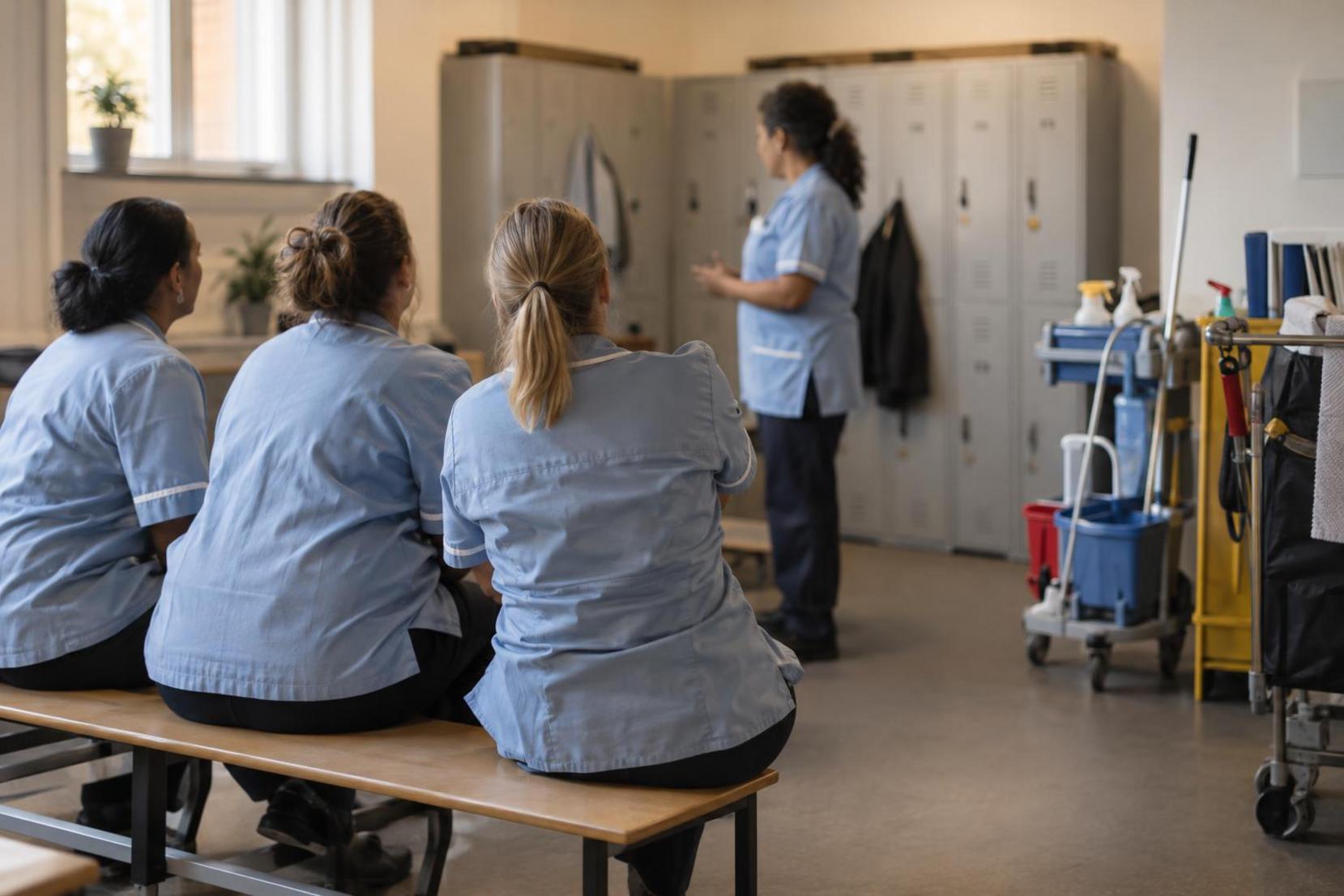
Yuliana finishes her shift at an office in central Madrid and, in the changing room, her coworkers are waiting for her with a proposal: “You should run for staff delegate.” For months their schedules have changed without notice and their pay has arrived late, and at their workplace, with 25 workers, there has never been…
-

Bereavement Leave in Spain: 10 Working Days and What Changes
When someone very close to you dies, the last thing anyone should have to do is go back to work two days later. Yet that is what the Workers’ Statute (Estatuto de los Trabajadores) provided until now: two days of leave for the death of a family member, four if you had to travel. From…
-

Boss Dies or Retires in Spain? What Happens to Your Contract
In many small businesses in Spain, the boss is not a faceless company. It is Ramón, the carpenter. It is Paco, from the bakery. A person with a first and last name who opens up in the morning and knows every employee. That is why, when that person dies or retires, the question comes right…
-

Collective Dismissal (ERE) in Spain: When It Is and What You Get
When your company announces that many people will be dismissed at once, the first thing you need to know is whether it is a collective dismissal, the well-known ERE. The name matters: if it is a collective dismissal in Spain, the company has to follow a specific procedure, negotiate with the workforce representatives, respect certain…
-

Supplementary Hours in Spain: Notice, Cancellation and What Changes
Lucía works in a clothing store on a permanent contract of 20 hours a week and a written agreement on supplementary hours (horas complementarias). On Thursday night she gets a message from her manager: “I need you tomorrow from five to nine.” Another week, her supplementary hours for Saturday had been set days in advance,…
-

ERTE in Spain: What It Means for Your Hours, Pay and Rights
“We are cutting your working hours in half for four months.” When a company announces something like this, the first thing many people feel is fear. Am I going to be fired? How much will I earn? What happens to my contract? Take a breath: an ERTE in Spain is not a dismissal. It is…
-

Asking to Become Permanent in Spain: New Right and One-Month Reply
You have been chaining temporary contracts for months, you are a seasonal permanent worker who wants to work all year round, or you have a 20-hour contract and could use more hours. You see that a permanent or full-time position is opening up at your company and you wonder whether you can apply for it…
-

Multiple Jobs in Spain: What Changes and When They Can Ban It
You work at an office during the week and at a café on Saturdays. One day your manager tells you that “in this company, having another job is not allowed” and that, if you carry on, there will be consequences. Can they do that? Since November 19, 2026 the law gives a much clearer answer.…
-

Vacation Dates in Spain: Can Your Employer Impose Them?
“This year, everyone takes their vacation in the second half of August.” It is an announcement heard in many companies every spring. And almost as common is what comes next: a few weeks before you leave, you are asked to change dates that had already been approved. If this has happened to you, the question…
-

Reduced Working Hours to Care for a Family Member in Spain
Gladys comes out of the pharmacy’s back room with the sheet of paper in her hand. She wrote it the night before, after putting her father-in-law to bed: she wants to reduce her working hours so she can look after him in the afternoons. The pharmacy owner skims it and hands it back. “Reduced hours…
-

Probationary Period in Spain: New Limits and Temporary Contracts
You have just signed a contract and one clause says you will be “on probation” for six months. Is that legal? Since November 19, 2026 the answer may be different from what it was a few weeks ago. Royal Decree-Law 39/2026 (Real Decreto-ley 39/2026), published in the BOE (Spain’s Official State Gazette) on November 18,…
-

Premature Baby in Spain: Hour of Absence and Reduced Working Hours
It is seven in the evening and Cristian is still in his delivery van, half an hour from the hospital. His daughter was born three days ago at 32 weeks, with low birth weight, and she is sleeping in an incubator in the neonatal unit of a hospital in Granada. Natalia, his partner, spends the…
-

SMI 2027 Approved in Spain: 1,286 Euros a Month and What Changes
The 2027 minimum wage (SMI) has been approved. Royal Decree 1013/2026, published in the BOE (Spain’s Official State Gazette) on November 19, 2026, sets the interprofessional minimum wage (salario mínimo interprofesional, SMI) for next year at 1,286 euros a month in 14 payments, 42.87 euros a day and 18,004 euros a year. That is a…
-

Extra Pay in Spain: When It Is Paid and If It Can Be Prorated
One Tuesday in November, mid-morning, Joel’s phone buzzed behind the counter. It was an email from the company, sent to all staff: “From January, the extra payments will be paid prorated in the monthly payslips to simplify administration.” Joel read it twice. He likes getting his extra payment in July and in December. And on…
-

Pay Transparency in Spain: Salary in Job Ads and Right to Know
Do you know whether you earn the same as colleagues who do the same job as you? Have you ever been asked in a job interview how much you used to earn? Pay transparency in Spain changes significantly with Royal Decree-Law 39/2026 (Real Decreto-ley 39/2026), published in the BOE (Spain’s Official State Gazette) on November…
-
Wage Garnishment in Spain: How Much of Your Salary Can Be Taken
Sergio opened his June payslip and stared at the number at the bottom. In May part of his salary had already been withheld for the garnishment, but June was something else: the month of his extra payment, the month he expected some breathing room, and his employer had taken much more. “Is this legal?” he…
-

Substitution Contract in Spain: When It Ends and Your Rights
Lorena is 32, Peruvian, holds a residence and work authorization and works as an administrative assistant at a services company in Córdoba. In January she signed a substitution contract to cover her coworker Cristina’s birth leave. Everything went well: she learned the job, Cristina came back in June and the contract ended. But the company…
-

Anxiety Sick Leave in Spain: When It Is a Work Accident
Sick leave for anxiety is not always a common illness. In Spain, sick leave for anxiety can be a work accident (accidente de trabajo) when it is proven that work was its exclusive cause, and that classification changes what you are paid from the first day. A case that has just become final, after the…
-

Temporary Contract in Spain: How Long and When You Go Permanent
Brayan is 26, Colombian, holds a residence and work authorization, and has spent almost two years preparing orders at a distribution warehouse in Getafe. Always the same shift, always the same task, all year round. A few days ago his supervisor told him: “Your contract ends on the 30th. Maybe we’ll call you again.” If…
-

Work-Study Training Contract in Spain: Working Hours and Pay
Aya is 19. She is in the first year of an intermediate vocational training course (ciclo de grado medio) in Cooking and Gastronomy in Murcia, and she has just signed her first contract at a restaurant in the city center. She is happy: she is learning the trade, earning a salary and staying in school.…
-

Gender-Based Violence and Work in Spain: Your Employment Rights
If you are experiencing gender-based violence or sexual violence, your job can be both a place where you do not feel safe and the salary that keeps you going. The good news is that you do not have to choose between your safety and your job. The Workers’ Statute (Estatuto de los Trabajadores) gives working…
-

Early Retirement for Train Drivers in Spain: What Changes in 2026
If you work as a train driver, train agent or in another operational railway category for a company that is not the former state operator, Royal Decree-Law 34/2026 (Real Decreto-ley 34/2026), published in the Official State Gazette (BOE) on November 11, 2026, affects you directly. From that same day, the retirement age reduction coefficients (coeficientes…