
Before we begin, we invite you to contact Fernanda Vargas to get answers to any questions you might have about these new travel systems. You can reach her on WhatsApp or book a consultation for personalized advice.
Chap. 1: EES and ETIAS, Two Distinct Changes Often Confused
In today’s international travel landscape, confusion between the Entry/Exit System (EES) and the European Travel Information and Authorisation System (ETIAS) is common. Although both systems aim to better manage entries and exits within the Schengen Area, they operate quite differently. The EES records biometric data upon entry and monitors the 90/180 days rule, while the ETIAS is an advance travel authorization specifically designed for visa-exempt travelers.
Chap. 2: The EES (Entry/Exit System), Already Mandatory in Spain Since April 2026
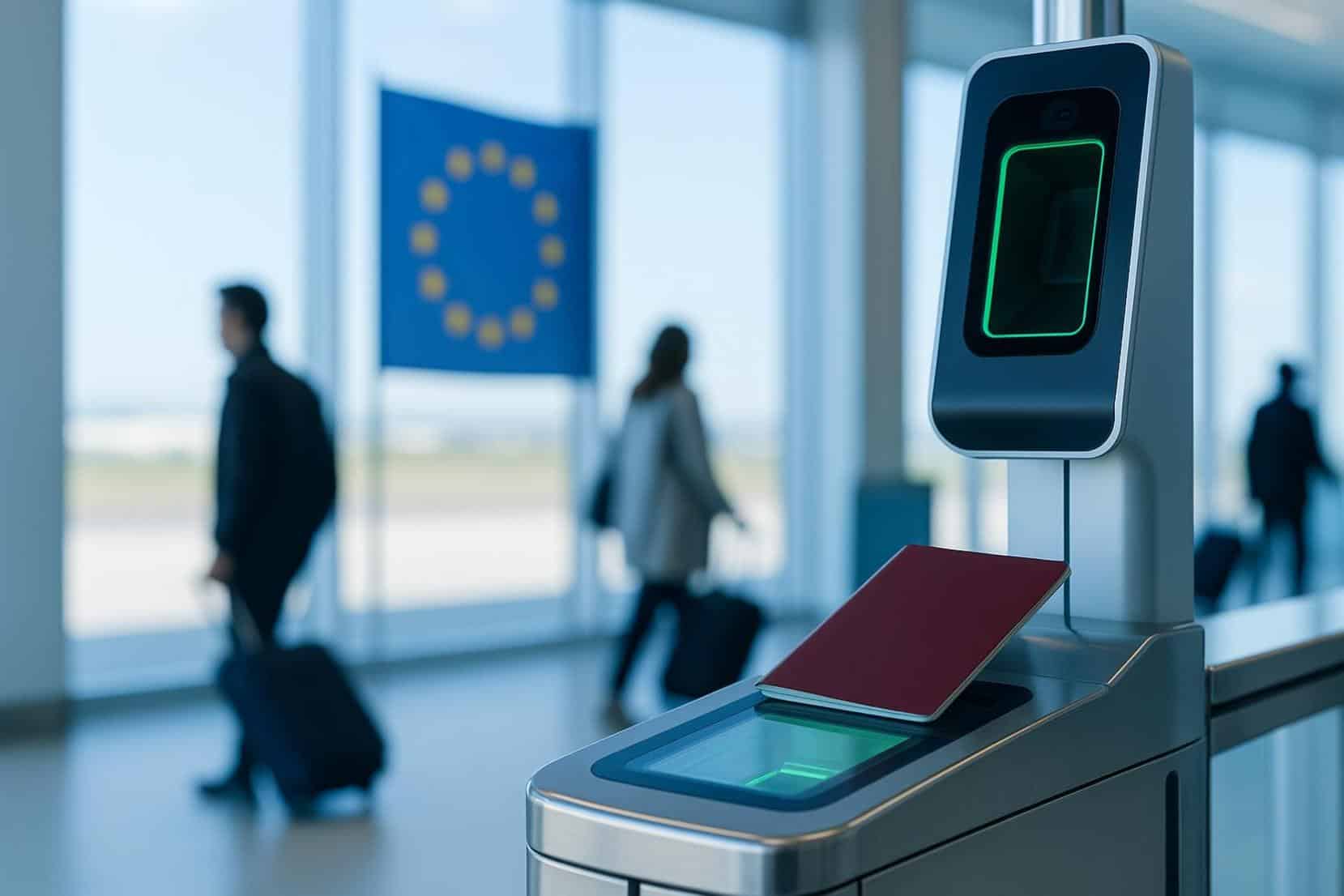
The EES has been mandatory in Spain since April 10, 2026, and is now the only legal method for recording entries and exits at airports, ports, and land borders with Gibraltar, Ceuta, and Melilla. This system collects biometric data—such as facial images and fingerprints—upon the traveler’s first entry and automatically registers the entry and exit dates. It also calculates compliance with the 90 days within any 180-day period, thereby detecting any irregular overstays. Although the technology represents a significant leap forward, early implementation has seen delays in popular tourist destinations due to biometric data collection challenges.
Chap. 3: ETIAS, the Travel Authorization Arriving in Q4 2026
Unlike the EES, ETIAS is not yet operational and is expected to be implemented in the last quarter of 2026. Not a visa but a travel authorization, ETIAS will require nationals from about 60 visa-exempt countries to apply online before traveling to any of the 30 European countries, including Spain. With an official fee set at 20 euros and exemptions applicable for minors under 18 and seniors over 70, the system is designed to be more efficient and cost-effective than traditional Schengen visa processes. Although most applications are resolved in minutes, some may take longer if additional documentation is required.
Chap. 4: Who Is Affected? Visa-Exempt Nationals and the 90/180 Days Rule
ETIAS will primarily affect nationals from countries that are currently visa-exempt when traveling for short stays. This includes many Latin American countries like Argentina, Brazil, Chile, Colombia, Costa Rica, El Salvador, Guatemala, Honduras, Mexico, Nicaragua, Panama, Paraguay, Peru, Uruguay, and Venezuela. It is critical for these travelers to understand the 90 days within any 180-day period rule to avoid overstaying their allowed time and facing potential penalties.
Chap. 5: Who Is NOT Affected? Residents in Spain and Long-Term Visa Holders
Both the EES and ETIAS are designed for short-term stays. Residents in Spain, who possess a residency permit or a long-term visa, are excluded from these regulations. Their legal status is maintained through their residency cards or long-term visas, and as such, these systems do not apply. It is vital to clearly distinguish between temporary visits and permanent residency in order to understand the relevant legal requirements.
Chap. 6: How to Apply for ETIAS Step-by-Step: Requirements, Cost (20€), Timeframes, and Validity
The process for obtaining ETIAS is straightforward and entirely online via the official website or a dedicated app. Applicants must have a passport valid for at least three months beyond the planned departure date, a valid email address, and they must complete the online form. The fee is set at 20 euros, with exemptions available for individuals under 18 and over 70. Once issued, the ETIAS is linked to the passport and is valid for up to 3 years or until the passport expires, whichever comes first. Although most applications result in an almost immediate decision, some cases might extend processing to 14 or even 30 days if further documentation or an interview is required.
Chap. 7: Border Delays, Common Errors, and How to Avoid Problems or Penalties
During the initial implementation phase of the EES, border delays have been reported—especially in tourist hotspots—primarily due to the intensive biometric verification process. Common issues include insufficient preparation of travel documentation and misunderstandings regarding the 90/180 days rule. To avoid complications, travelers should ensure that they have all the necessary documents prepared and consult with immigration experts if there is any uncertainty about compliance with the new rules.
Chap. 8: Frequently Asked Questions and Practical Travel Recommendations
Before embarking on your journey, you might have several questions, such as what happens if you exceed the 90-day limit in a 180-day period, or how the ETIAS is linked to your passport. Additional queries include the potential for document delays or requests for further information. Practical recommendations include:
- Ensure your passport has ample validity.
- Apply for ETIAS well in advance to account for any processing delays.
- Stay updated on how the EES is performing, especially during peak travel seasons.
- Consult with an immigration expert to clarify any doubts regarding your specific situation.
This guide combines the most current official data with practical travel advice, ensuring that you have a comprehensive resource at your disposal. Please note that this information is provided as general guidance and does not constitute personalized legal advice.
If you need detailed, tailored advice, please contact Fernanda Vargas via WhatsApp (click here) or book a consultation through Calendly (book here).